Most South Africans grew up buying eggs from supermarkets without giving it much thought. An egg is an egg — protein, cholesterol, versatile cooking ingredient. But spend a week cooking with genuinely free range eggs from a reputable South Africa supplier and then go back to supermarket eggs, and the difference becomes impossible to ignore. It's not subtle. It's not placebo. It's immediately, visibly, tastably real.
Here's what actually separates farm-fresh wholesale eggs South Africa from what most supermarkets stock — and why it matters to retailers, chefs, and home cooks alike.
The Yolk Tells the Story Instantly
Crack a farm-fresh free-range egg next to a standard supermarket egg and you'll notice the difference before you even taste anything. The farm egg has a deep, vivid orange yolk — the colour of a late afternoon sunset. The supermarket egg has a pale, washed-out yellow yolk that looks almost anaemic by comparison.
This isn't aesthetics. That colour difference is beta-carotene — the same antioxidant compound found in carrots and sweet potatoes — which hens produce in their yolks when they're eating a natural, varied diet that includes grasses, insects, and outdoor forage. A hen confined to a barn or cage and fed only processed grain feed simply cannot produce the same yolk.
You can fake a lot of things in food production. Yolk colour isn't one of them — not without feed additives that ethical producers won't use.
Freshness vs Age: The Shelf Life Reality
Supermarket eggs travel. From farm to packing facility, to distribution centre, to regional warehouse, to store shelf, a supermarket egg may be anywhere from 2 to 6 weeks old by the time it reaches you — and still be within its legal use-by date. South African regulations allow eggs to be sold up to 4 weeks after packing, and packing itself may occur days after laying.
A genuinely farm-fresh egg from a local supplier like Marang Group has a radically different timeline. Our eggs typically move from farm to customer within 3–5 days of laying. That freshness shows up in two practical ways:
- The float test: A truly fresh egg sinks and lies flat in water. An older egg tilts upward — and a very old egg floats entirely, as the air cell inside expands over time. Try this with supermarket eggs and farm-fresh eggs side by side.
- The white consistency: Fresh eggs have a thick, gelatinous white that holds its shape when cracked. Older eggs have thin, watery whites that spread across the pan. For poached eggs, fried eggs, or any recipe where presentation matters, this distinction is enormous.
Taste: Not Subjective, Just Chemistry
Professional chefs — including those at Michelin-starred restaurants worldwide — consistently prefer farm-fresh free-range eggs in blind taste tests. This isn't sentiment. The taste difference comes from two sources:
- Diet diversity: A free-range hen eating insects, seeds, and grasses develops a more complex fat profile in her eggs. Those varied fats carry flavour compounds that grain-fed eggs simply don't have.
- Freshness: Eggs continue to undergo chemical changes after laying. Sulphurous compounds develop over time — which is why older eggs have that distinctive "eggy" smell that farm-fresh eggs don't. Fresh eggs taste cleaner, creamier, and more distinctly of egg in the best possible sense.
What About Price?
Farm-fresh free-range eggs cost more than battery cage supermarket eggs. This is a fact. But the price premium reflects real differences in production costs: more land per hen, lower stocking density, higher feed costs, and more labour-intensive collection and packing processes.
The question isn't whether farm eggs are expensive — it's whether the premium is worth it. For the average South African household that uses eggs regularly, the cost difference between a supermarket dozen and a farm-fresh dozen is a few rand per week. Against the backdrop of genuinely better nutrition, better taste, and significantly better animal welfare, most people who make the switch consider it straightforwardly worth it.
What Marang Group's Farm Eggs Offer
Marang Group produces farm-fresh eggs from our own farm in the Rustenburg area of North West Province. Our broiler chickens are well looked after — raised on hormone-free feed and managed with care and consistency. We collect daily and keep the supply chain short, so what reaches your shelves or kitchen is genuinely fresh.
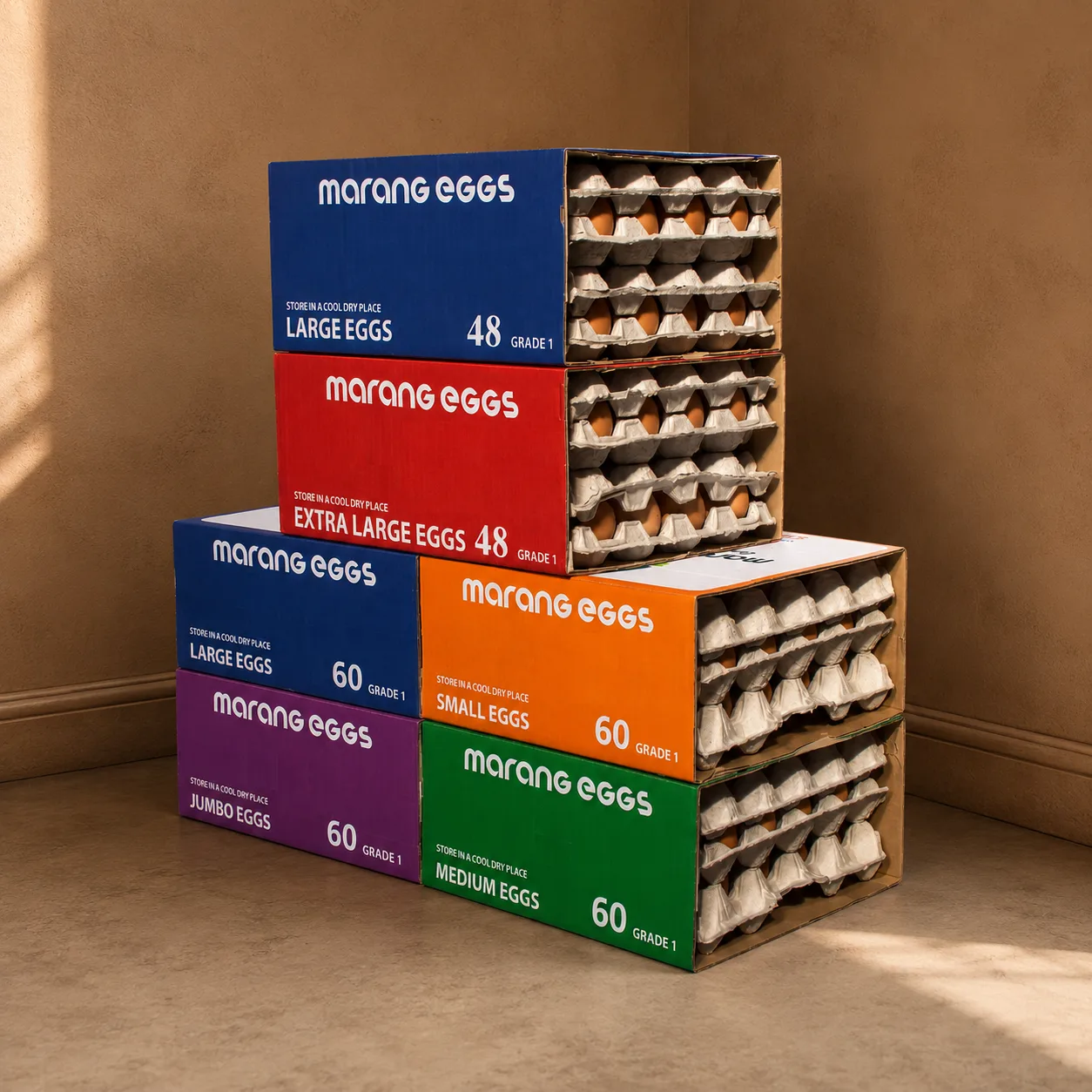
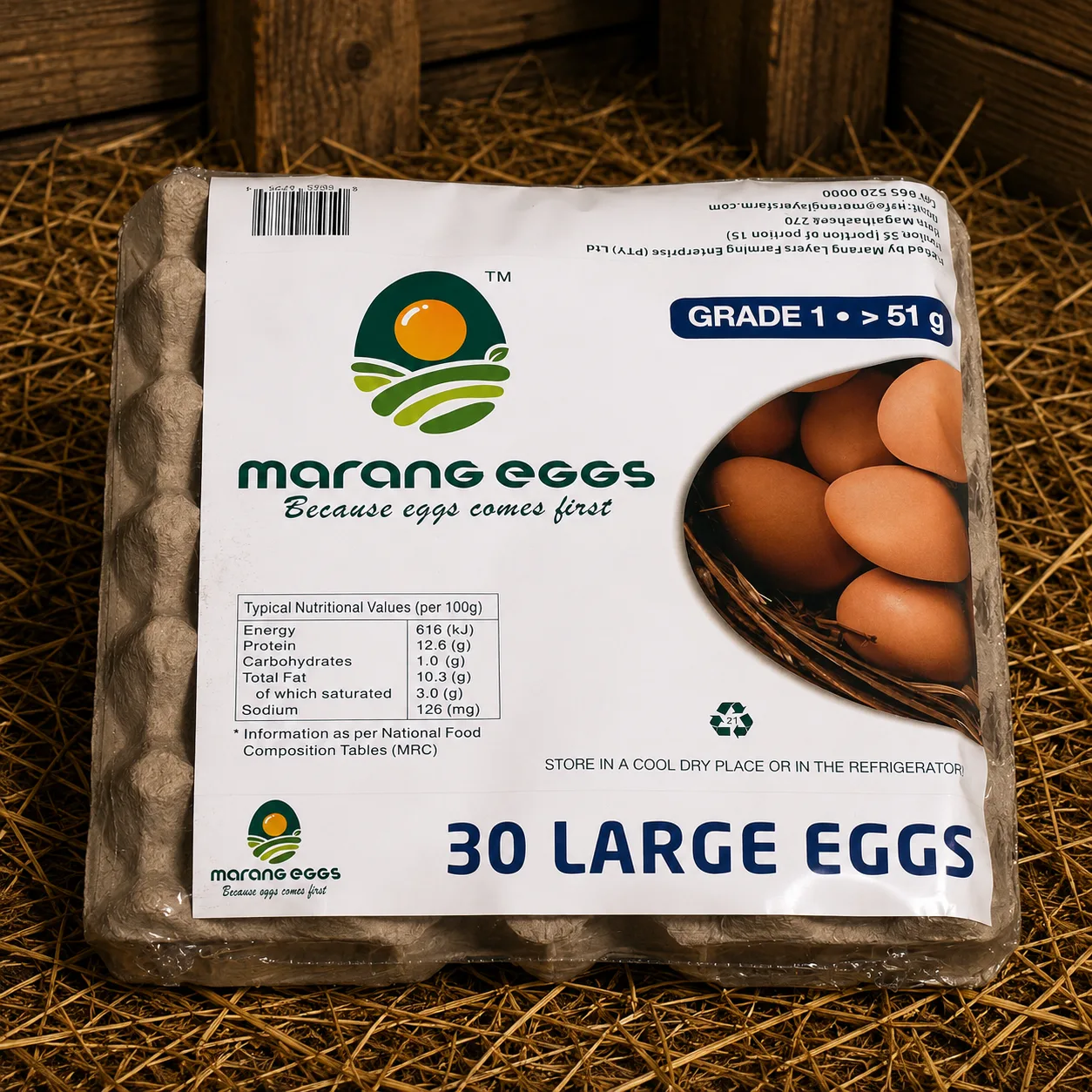
Our wholesale eggs South Africa are available to retailers, food service businesses, and bulk buyers across North West Province and neighbouring regions. We supply in 6-packs, 12-packs, 30-count trays, and full 360-egg crates, with delivery schedules designed around your business needs.
Ready to Switch to Farm Fresh?
Contact Marang Group for retail stocking, restaurant supply, or wholesale pricing on our farm fresh eggs.
Get in Touch →The Honest Answer
Yes — there really is a difference. Not a marginal, barely-noticeable difference, but a visible, measurable, immediately tasteable difference between a genuinely farm-fresh free-range egg and a standard supermarket egg. Once you've cooked with the real thing, the supermarket shelf becomes a very different place.